Pawn Shop Advertising: Where Should You Spend Your Budget?
Advertising a pawn shop involves more than choosing a platform and setting a budget.
A local business may have access to search advertising, social media, local campaigns, digital listings, traditional advertising, email, direct communication, and other promotional channels.
The challenge is not simply deciding where to spend money.
It is understanding which channels are relevant to the business, what each channel is expected to achieve, and whether the results justify the investment.
Start With the Business Objective
Advertising works differently depending on what the business is trying to achieve.
A pawn shop may want to increase awareness in a local area, attract people searching for a specific service, promote merchandise, generate inquiries, or encourage previous customers to return.
These objectives do not necessarily require the same advertising approach.
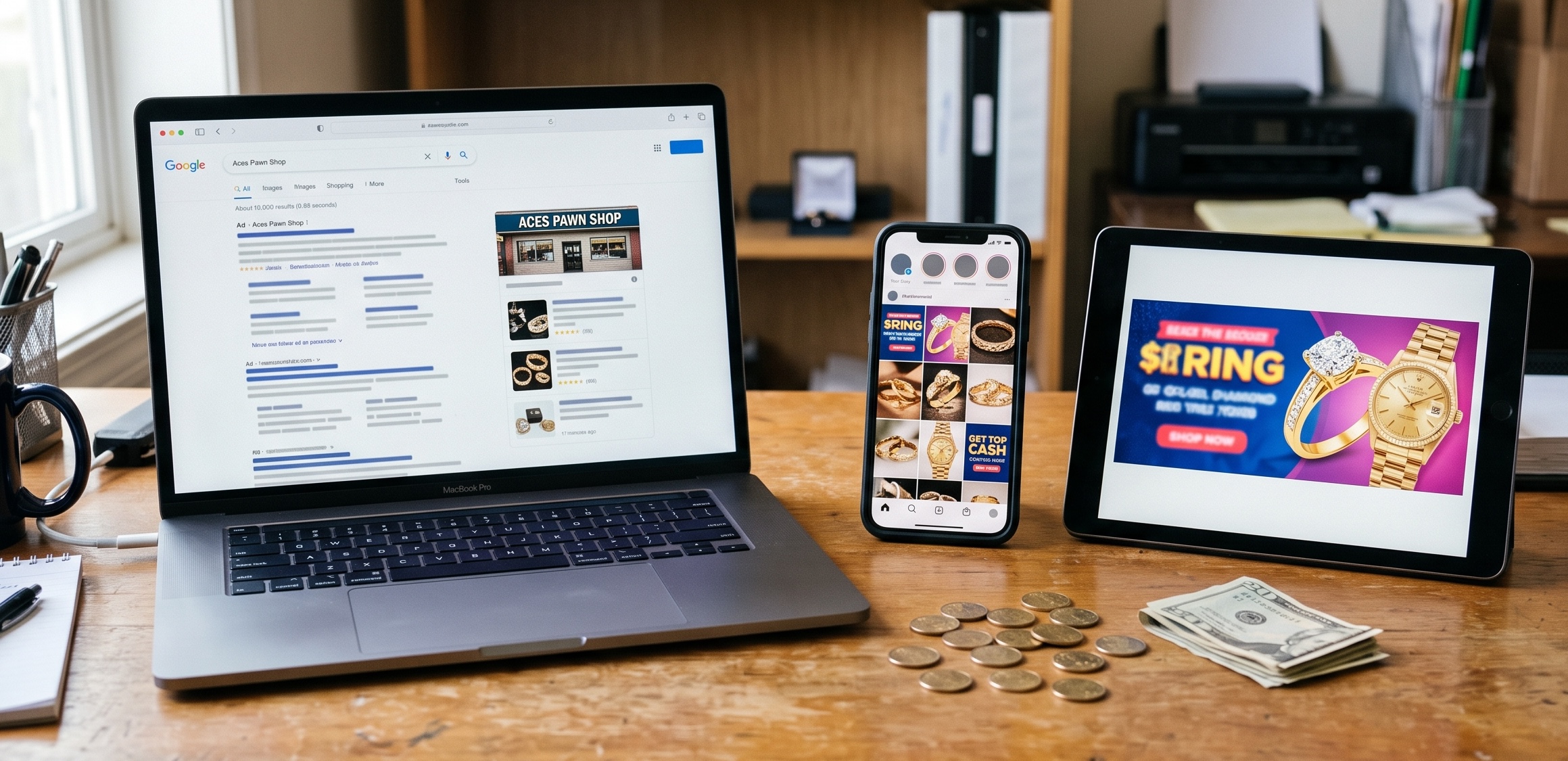
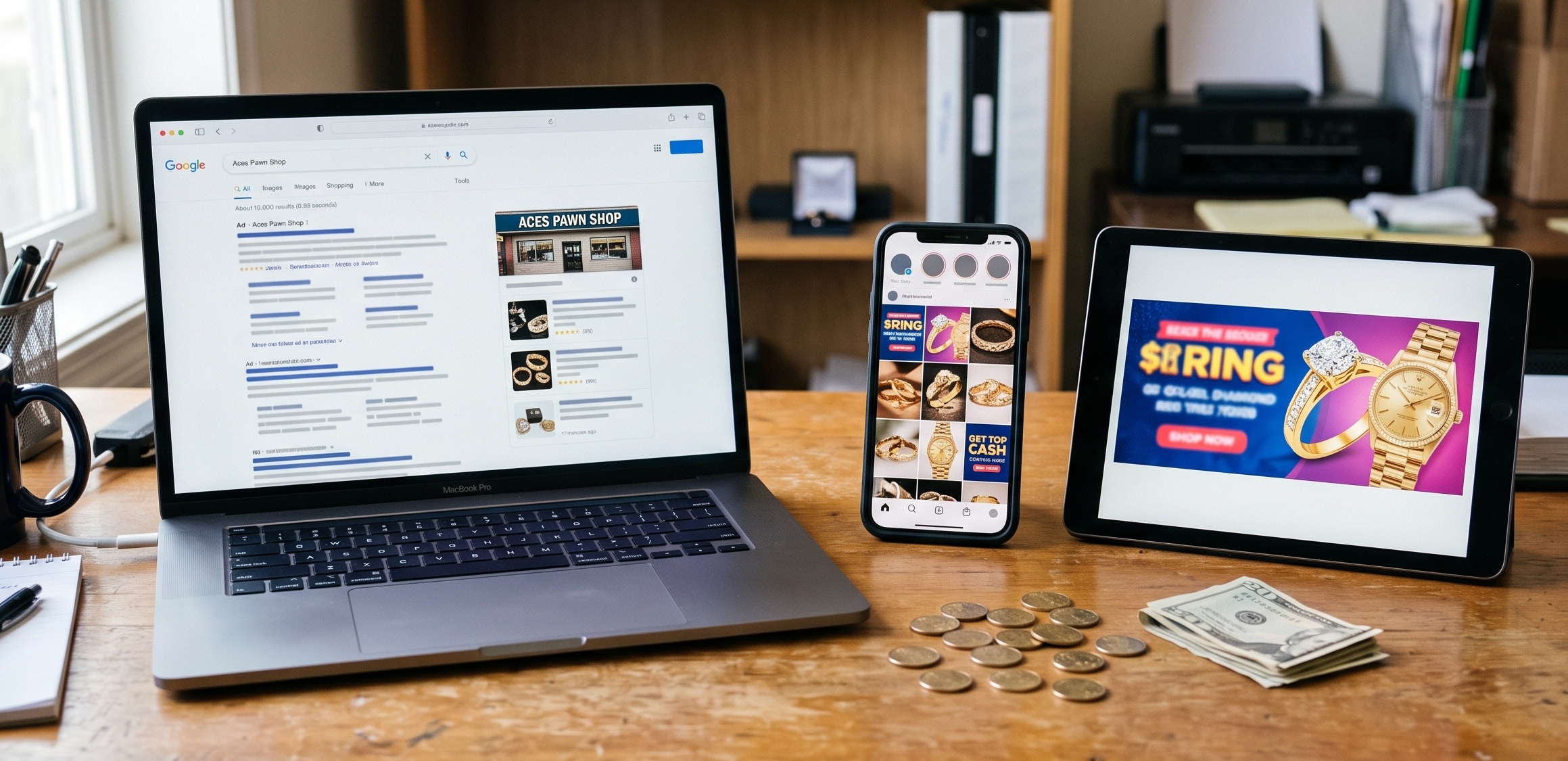
Search advertising, for example, can reach people who are actively looking for a particular product or service. Social media can be used to introduce products, communicate offers, and maintain visibility among relevant audiences.
The first question is therefore not which platform is most popular.
It is what the advertising is expected to accomplish.
“The advertising channel should follow the business objective,” says Avi-Meir Zaslavsky, founder of 999Precious. “A campaign designed to generate immediate inquiries has a different purpose from one designed to build local awareness. The budget should be considered in that context.”

Local Visibility Can Be Important
For a pawn shop serving a defined geographic area, location is an important part of advertising strategy.
Potential customers may search for pawn shops, specific services, or particular types of merchandise within a relatively limited area.
This makes local search visibility particularly relevant.
Google states that local search results are primarily based on relevance, distance, and prominence, while complete and accurate Business Profile information can help a business appear in relevant local searches.
Paid advertising can complement this organic presence, but the two should not be treated as the same activity.
A business may need to consider both how it appears when people actively search and how it reaches people who are not currently searching.
Search Advertising and Intent
Search advertising has a particular characteristic: it can reach people at the moment they are searching for a product, service, or business.
For a pawn shop, this could include searches related to selling or pawning items, buying particular categories of merchandise, or finding a local pawn shop.
This intent can make search advertising relevant for campaigns where generating direct inquiries or visits is the primary objective.
However, search volume varies by location, service, product category, and season.
A large advertising budget does not automatically create more relevant searches.
“The value of search advertising is partly connected to intent,” says Avi-Meir Zaslavsky. “Someone actively looking for a service is in a different situation from someone who simply encounters an advertisement. That distinction should be considered when evaluating different channels.”
Social Media Serves a Different Purpose
Social media advertising can reach audiences based on factors such as demographics, interests, behaviors, and other targeting options available on the platform.
For a pawn shop, it can be useful for showcasing merchandise, communicating promotions, introducing services, and maintaining awareness of the business.
It can also provide a visual way to demonstrate what the business offers.
But social media does not necessarily capture the same level of immediate intent as a search query.
This means that a campaign should be evaluated according to its objective rather than compared directly with every other advertising channel.
“A social media campaign and a search campaign may both generate business value, but they can do it at different stages,” Avi-Meir Zaslavsky explains. “One may introduce the business or product, while another reaches someone who is already looking for a solution.”
Advertising Merchandise Requires a Different Approach
Pawn shops have an additional advertising opportunity that many service businesses do not: merchandise.
A particular watch, piece of jewelry, electronic device, musical instrument, or other item can become the subject of an individual advertisement.
In this case, the quality of the product presentation becomes especially important.
Clear photography, accurate descriptions, relevant product information, price information where appropriate, and an easy way to make an inquiry can all affect how effectively the advertisement communicates the offer.
Product advertising should also reflect the actual inventory available.
A campaign promoting products that are no longer available can create a poor customer experience and reduce the usefulness of the advertising spend.
The Budget Should Not Be Based Only on Reach
Reach and impressions can show how many people were exposed to an advertisement.
They do not necessarily show how many relevant customers interacted with the business.
Depending on the campaign objective, more useful measurements may include:
- Qualified inquiries
- Calls
- Website visits
- Store visits where measurable
- Product inquiries
- Leads
- Conversions
- Cost per qualified lead
- Revenue attributable to advertising where it can be reliably measured
The appropriate metric depends on what the campaign was designed to accomplish.
A campaign intended to increase local awareness should not necessarily be judged by the same criteria as a campaign designed to generate direct inquiries.
“Advertising metrics need to be connected to the business objective,” says Avi-Meir Zaslavsky. “A high number of impressions can look impressive, but the more important question is what happened after the exposure.”
Test Before Increasing the Budget
A limited initial budget can also be used to test different approaches.
A business may compare different audiences, messages, creative formats, geographic areas, products, or advertising channels.
The purpose is to learn which combinations generate meaningful results before committing a larger portion of the budget.
Testing does not mean changing everything at once.
If several variables are changed simultaneously, it becomes harder to understand which change influenced the result.
The Cheapest Channel Is Not Always the Most Effective
A low cost per click or low cost per impression does not necessarily mean that an advertising channel is producing the best business result.
One channel may generate inexpensive traffic but few qualified inquiries.
Another may cost more per click but produce customers with a stronger commercial intent.
The cost of the advertising therefore needs to be considered alongside the quality of the response it generates.
For a pawn shop, the relevant question may ultimately be how much business value a campaign produces relative to the amount spent.
The Customer Journey Does Not End With the Advertisement
An advertisement is only one part of the process.
After seeing an advertisement, a potential customer may visit the website, check reviews, look at social media, call the business, compare alternatives, or visit the physical location.
This means advertising performance can also depend on what happens after someone responds to the campaign.
A slow response to inquiries, unclear information, outdated product listings, or inconsistent business details can weaken the result of otherwise well-targeted advertising.
“An advertisement can create the first interaction, but it does not control everything that happens afterward,” says Avi-Meir Zaslavsky. “The website, communication, reviews, and customer experience all become part of the process.”
Where Should the Budget Go?
There is no single advertising channel that is automatically appropriate for every pawn shop.
The right allocation depends on factors such as:
- Business objectives
- Location and market size
- Services offered
- Product categories
- Existing customer base
- Search demand
- Available advertising platforms
- Competition
- Previous campaign results
- Budget size
A business with strong search demand may allocate more attention to search campaigns.
A business with a large and frequently changing merchandise inventory may place greater emphasis on product-focused advertising and social media.
Another business may need to prioritize local awareness and reputation before increasing paid advertising.
The important point is that the allocation should reflect the business rather than follow a universal percentage or formula.
Advertising Should Be Treated as an Ongoing Process
Advertising is rarely a decision that can be made once and left unchanged.
Markets change, customer behavior changes, inventory changes, and advertising platforms change.
Campaign performance should therefore be reviewed regularly, with adjustments based on the information available.
A campaign that performs well in one period may require a different approach later.
“Advertising budgets should be treated as something that can be learned from and adjusted,” says Avi-Meir Zaslavsky. “The goal is not to find one perfect channel. It is to understand which activities are producing relevant results and allocate resources accordingly.”
From Spending to Investment
The question of where a pawn shop should spend its advertising budget is ultimately a question of what the business needs the advertising to accomplish.
Search can capture existing demand.
Social media can support visibility and product promotion.
Local advertising can help maintain awareness within a defined market.
Direct communication and other channels can support existing relationships.
None of these channels is automatically the right choice in every situation.
The more useful approach is to define the objective, select channels that can reasonably support it, measure the relevant outcome, and adjust the allocation based on what the business learns.